
Blog
Monday, Aug 03Top Website Features Every Business Should Have in 2026
Is Your Website Ready for the Expectations of 2026?
This is how most customer journeys begin today. Someone discovers your business through a Google search, a social media post, or a recommendation from a friend. Within moments, they're on your website, deciding whether your business is worth their time. Before they read about your services or contact your team, they've already formed an impression based on what they see and experience. Curious, they visit your website. Within seconds, they're already forming an opinion. Is it fast? Does it look professional? Can they easily find what they're looking for? If the answer to any of these questions is "no," chances are they'll leave before you even know they were there.
This is the reality of today's digital world. A website is no longer just a place where customers can learn about your business it has become the foundation of your online presence. It's your first impression, your digital storefront, your sales representative and often your customer's first interaction with your brand.
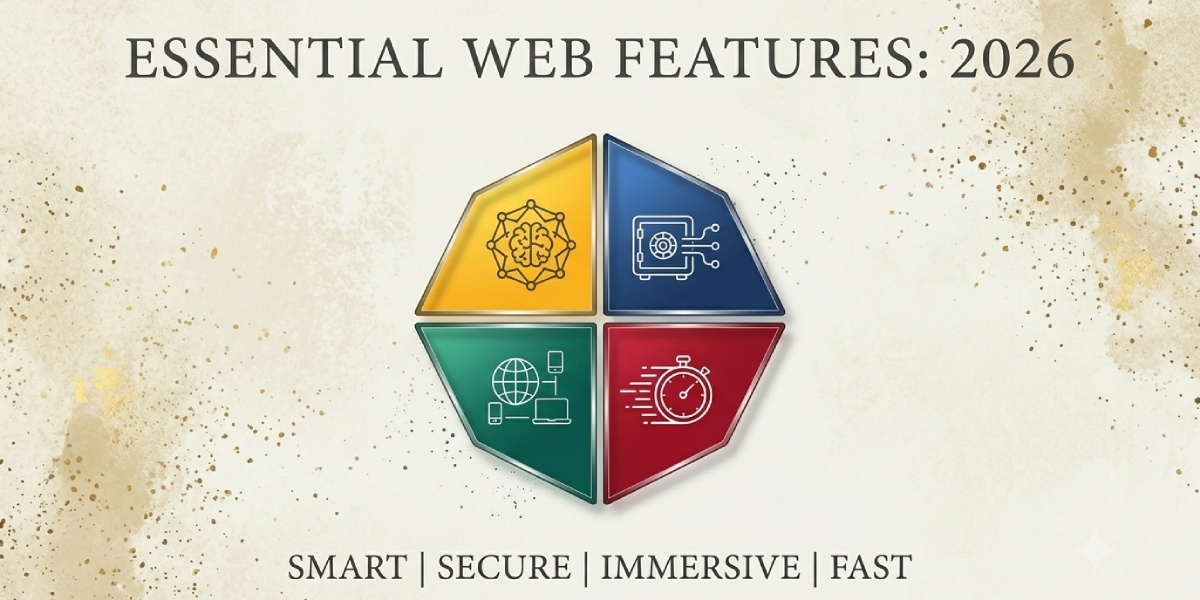
As we move through 2026, customer expectations continue to evolve. People expect websites to be fast, secure, intelligent and accessible from any device. At the same time, search engines and AI-powered platforms are prioritizing websites that provide exceptional user experiences and valuable content.
Whether you're running a startup, a local business or a large enterprise, investing in the right website features can significantly impact your ability to attract visitors, generate leads and build long-term customer relationships. Let's explore the essential website features every business should have in 2026.
1. Lightning-Fast Loading Speed
Speed has always mattered, but in 2026, it's more important than ever. Users expect websites to load almost instantly. Even a few extra seconds can lead to higher bounce rates, fewer conversions and lost revenue.
A fast website improves user satisfaction, increases engagement and helps improve search engine rankings. Optimizing images, reducing unnecessary scripts, using modern caching techniques and choosing reliable hosting are all essential for delivering exceptional performance.
Remember, every second counts. A faster website creates a better first impression and keeps visitors engaged.
2. Mobile-First and Responsive Design
More than half of all web traffic now comes from mobile devices and this trend continues to grow. Customers expect the same seamless experience whether they're browsing on a smartphone, tablet or desktop.
A responsive website automatically adjusts its layout to fit different screen sizes, making navigation easier and improving readability. Buttons should be easy to tap, text should be easy to read and every page should function smoothly across devices.
A mobile-first approach isn't just about convenience it's about meeting customers where they are.
3. AI-Powered Customer Assistance
Artificial Intelligence has transformed the way businesses interact with customers. Modern websites are increasingly integrating AI-powered chatbots and virtual assistants that provide instant support around the clock.
Instead of waiting for office hours, visitors can ask questions, find products, schedule appointments or receive recommendations within seconds.
AI-powered assistance improves customer satisfaction while reducing the workload on support teams, making it a valuable addition for businesses of all sizes.
4. Strong Website Security
Cybersecurity is no longer optional. As online threats continue to evolve, businesses must prioritize protecting both their website and their customers' data.
Essential security features include:
- SSL certificates
- Firewall protection
- Malware detection
- Regular security updates
- Automated backups
- Multi-factor authentication for administrators
A secure website builds trust, protects sensitive information and helps maintain your brand's reputation.
5. Clear Calls-to-Action (CTAs)
A beautiful website means very little if visitors don't know what to do next.
Every page should guide users toward a specific action, whether it's requesting a quote, booking a consultation, downloading a brochure or contacting your team.
Effective CTAs are clear, visible and strategically placed throughout the website. Instead of simply providing information, your website should encourage visitors to take the next step in their customer journey.
6. SEO and AI Search Optimization
Traditional SEO remains essential, but the search landscape is changing rapidly. In addition to ranking on Google, businesses now need to optimize their websites for AI-powered search platforms such as ChatGPT, Google AI Overviews, Microsoft Copilot, Gemini and Perplexity.
This means creating high-quality content, implementing structured data, maintaining clear website architecture and providing accurate, trustworthy information.
Businesses that optimize for both traditional search engines and AI-powered discovery will have a significant competitive advantage.
7. Easy Content Management
Business information changes frequently. New services are introduced, promotions are launched and company updates need to be published quickly.
A user-friendly Content Management System (CMS) allows businesses to update their website without relying on developers for every small change.
An efficient CMS saves time, reduces costs and enables marketing teams to keep content fresh and relevant.
8. Accessibility for Every User
An inclusive website is a better website.
Accessibility ensures that people with disabilities can navigate and interact with your website effectively. Features such as keyboard navigation, screen reader compatibility, readable fonts, sufficient color contrast and descriptive image alt text create a better experience for everyone.
Besides improving usability, accessibility also supports legal compliance and strengthens your brand's reputation for inclusivity.
9. Customer Reviews and Social Proof
Trust plays a major role in purchasing decisions.
Displaying customer testimonials, case studies, client logos, certifications, awards and success stories helps reassure potential customers that your business delivers on its promises.
Authentic social proof builds credibility far more effectively than marketing claims alone.
10. Analytics and Performance Tracking
You can't improve what you don't measure.
Modern websites should integrate analytics tools that provide valuable insights into visitor behavior, traffic sources, conversion rates and user engagement.
By understanding how users interact with your website, businesses can make informed decisions, improve user experience and maximize marketing performance.
Data-driven optimization is one of the biggest advantages successful businesses have in today's digital landscape.
11. Personalized User Experiences
Customers increasingly expect websites to understand their needs.
Personalization can include recommending relevant products, displaying location-based content, remembering returning visitors or suggesting articles based on browsing history.
These personalized experiences create stronger engagement and increase the likelihood of conversions by making visitors feel understood rather than treated as anonymous users.
12. Future-Ready Scalability
Technology changes quickly. Your website should be built with the future in mind.
Whether you're expanding your services, adding e-commerce functionality, integrating third-party software or reaching international markets, your website should be able to grow alongside your business.
Choosing scalable technologies today prevents costly redesigns tomorrow.
Why These Features Matter More Than Ever
Customers today have endless choices. If one website fails to meet their expectations, another is only a click away.
Businesses that invest in modern website features don't just improve their online presence they strengthen customer trust, increase conversions, improve search visibility and create better experiences that encourage long-term loyalty.
Your website is no longer a passive marketing asset. It actively influences how customers perceive your business and whether they decide to engage with your brand.
Final Thoughts
The digital landscape in 2026 is more competitive than ever and businesses can no longer afford to treat their website as a one-time project. It should evolve alongside changing technologies, customer expectations and industry trends.
From lightning-fast performance and mobile-first design to AI-powered assistance, robust security, accessibility and search optimization, every feature plays a role in delivering exceptional user experiences and supporting business growth.
If your website hasn't been updated in the last few years, now is the perfect time to evaluate whether it's meeting the expectations of today's customers. Investing in a modern, future-ready website isn't just about staying current it's about creating a digital experience that builds trust, drives conversions and helps your business thrive in an increasingly competitive online world.
Because in 2026, your website isn't just where people find your business.
It's where they decide whether your business is worth choosing.