Blog
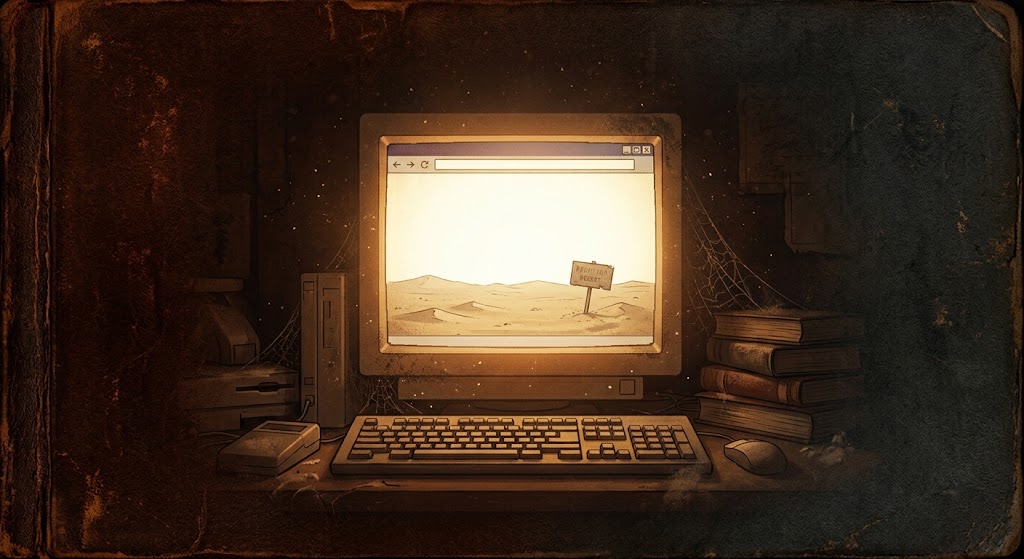
Friday, Sep 04The Website That Nobody Visited
The Launch
At 9:12 on a Monday morning, Ramesh opened his laptop and checked his website analytics.
He stared at the screen.
7 visitors.
He refreshed the page.
Still 7.
For a moment, he simply sat there, staring at the number.
It had been almost a month since his company's new website had gone live. And as far as Ramesh was concerned, everything had been done right.
The website looked modern. The images were carefully selected. The services were clearly presented. The colours matched the brand, the pages were neatly organized, and the website worked perfectly on mobile.
He had spent weeks reviewing every little detail.
“Make the logo a little bigger.”
“Let's change this image.”
“Can we move this button?”
“Does this look good on mobile?”
He had asked questions about everything.
After all, this wasn't just another website.
It was the digital face of his business.
On the day it launched, Ramesh was genuinely excited. He shared the link with his team, friends, business partners and a few loyal customers.
The responses were exactly what he had hoped for.
“Wow, this looks great!”
“Very professional.”
“Much better than the old website.”
Ramesh smiled.
He had finally taken his business online.
Now, he thought, customers would find him.
Someone would search for his services on Google. They would discover his company, visit the website, look around, and eventually make an inquiry.
It seemed simple.
But as the days passed, something felt strangely quiet.
No sudden increase in inquiries.
No stream of new customers.
No flood of phone calls.
Just silence.
Ramesh kept telling himself that it was too early to worry.
“People will find it eventually.”
But they didn't.
And almost a month later, his analytics still showed the same disappointing story.
Seven visitors.
Ramesh leaned back in his chair.
The website was beautiful.
The website was working.
The website was online.
So why wasn't anyone visiting?
The Search
The next morning, Ramesh decided to do something simple.
He opened Google.
He typed the name of his business into the search bar and pressed Enter.
For a moment, he expected to see his website right at the top.
It was his business, after all. The website was live. The company name was correct. Everything looked professional.
But his website was nowhere to be seen.
Instead, the first few results belonged to his competitors.
One had an outdated-looking website. Another had fewer services listed. One business barely seemed active online at all.
Yet they were there.
Ramesh scrolled through the first page.
Nothing.
He went to the second page.
Still nothing.
He checked again, this time using a phrase he believed his customers would search for.
The result was the same.
His competitors were visible.
He wasn't.
Ramesh leaned back in his chair.
“How can people visit my website if they can't find it?”
It was the first time he looked at his website from a customer's perspective.
Until then, he had been asking the wrong question.
He had asked, “Does my website look good?”
He had never asked, “Can my customers find it?”
And that difference changed everything.
A website could be beautifully designed, filled with carefully written content, and built with the latest technology. But none of that mattered if it remained invisible to the people searching for what the business offered.
Ramesh finally understood that launching a website was not the finish line.
It was the beginning.
The website had been built.
Now, it had to be discovered.
The Missing Piece
Ramesh called the person who had helped build his website.
“I have a question,” he said. “Why can’t I find my own website on Google?”
There was a brief silence.
Then came a simple answer.
“Because having a website and being visible online are two different things.”
Ramesh paused.
He had never thought about it that way.
For months, he had focused on the website itself the colors, the layout, the images, the pages, the mobile design. He had treated the launch as the moment when everything would finally come together.
But the internet did not work that way.
A website could exist without being noticed.
It could be fast, attractive, and professionally built, yet remain almost invisible to the people who mattered most: potential customers.
Ramesh began looking at his competitors differently.
Why did their websites appear when he searched?
Why did Google understand what their businesses offered?
Why did some of them appear when people searched for services rather than their exact business names?
The answers led him to a word he had heard many times but never paid much attention to.
SEO.
Search Engine Optimization.
It sounded technical at first. But the idea behind it was surprisingly simple.
If a customer was looking for a service, the business needed to make it easy for search engines to understand that the business could provide it.
That meant the website needed more than attractive pages.
It needed the right information.
Useful content.
Clear page structures.
Relevant search terms.
Fast loading times.
A mobile-friendly experience.
And, most importantly, a reason for Google to trust that the website deserved to be shown to people.
Ramesh looked at his own website again.
For the first time, he wasn't looking at it as the owner.
He was looking at it as a customer.
And suddenly, he noticed things he had never noticed before.
The First Look
Ramesh opened the website again.
This time, he didn't admire the design.
He tested it.
First, he opened it on his phone.
The homepage took a few seconds to load. The images looked impressive, but they occupied most of the screen. He had to scroll before finding the information he was actually looking for.
Then he asked himself a question.
“If I were a customer, would I stay?”
He wasn't sure.
He opened the services page.
The information was there, but it wasn't immediately clear what the business actually specialized in. Some sections were filled with carefully written descriptions, while the most important details were buried further down the page.
He went back to the homepage.
There was another problem.
What was the customer supposed to do next?
There was no obvious reason to call.
No clear request button.
No simple path from “I am interested” to “I want to contact this business.”
Ramesh had spent weeks making the website look professional.
But he had never stopped to ask whether it was helping visitors make decisions.
That realization made him look at the website differently.
A website wasn't simply a digital brochure.
It was a salesperson that never slept.
It had to answer questions.
It had to build trust.
It had to guide visitors.
And it had to make taking the next step easy.
Ramesh began writing down everything he noticed.
Can people find us?
Can they understand what we offer?
Can they trust us?
Can they contact us easily?
For the first time since launching the website, he wasn't thinking about how beautiful it looked.
He was thinking about whether it worked.
And that was the beginning of the real transformation.
The Invisible Customers
That evening, Ramesh opened his analytics again.
Seven visitors.
He looked at the number for a long time.
Seven people had visited his website since the launch.
But then another thought crossed his mind.
Those seven visitors were not just numbers.
They were people.
Perhaps one of them had been looking for the exact service his business offered. Perhaps another had been comparing several companies. Someone might even have been ready to make an inquiry.
And then Ramesh thought about the thousands of people who had never reached his website at all.
They were the invisible customers.
They were searching.
They were comparing.
They were making decisions.
But they were finding someone else.
Ramesh realized that his biggest competition wasn't necessarily the company with the better service or the better website.
It was the company that appeared in front of the customer at the right moment.
A customer could search for a service, discover a competitor, visit their website, read their reviews, and make a decision all without ever knowing that Ramesh's business existed.
That was the real cost of being invisible.
It wasn't simply fewer website visitors.
It was missed opportunities.
Missed inquiries.
Missed sales.
And customers who never had the chance to choose his business.
Ramesh closed the analytics dashboard.
The next morning, he made a decision.
He wasn't going to rebuild the website just because it wasn't getting enough visitors.
He was going to find out what was stopping the right people from finding it in the first place.
The Changes
Ramesh did not ask for a completely new website.
Instead, he asked a different question.
“What can we improve?”
The first change was visibility.
The pages needed to clearly communicate what the business offered and who it served. The content was rewritten with the customer in mind not simply to fill pages, but to answer the questions people were already asking.
The next change was speed.
Large images were optimized. Unnecessary elements were removed. Pages were tested again, this time on different devices and slower connections.
Then came mobile.
Ramesh had assumed that because the website worked on his phone, it was mobile-friendly.
He realized that working and working well were not the same thing.
Buttons needed to be easier to tap. Important information needed to appear sooner. Navigation needed to feel effortless.
The team also worked on the website's search visibility.
Each important page was given a clear purpose. Titles and descriptions were improved. Content was structured more carefully. Relevant search terms were incorporated naturally rather than being forced into every sentence.
But there was one more thing Ramesh had overlooked.
Trust.
A new customer had no reason to trust a business simply because its website looked polished.
So the website began showing what existed behind the design real work, real services, customer experiences, contact information, and the details people needed before making a decision.
Finally, the most important question was addressed:
What should a visitor do next?
Instead of leaving visitors to figure it out themselves, the website began guiding them.
Call.
Request information.
Book a consultation.
Send an inquiry.
The changes weren't dramatic when viewed individually.
There was no single button that suddenly transformed the business.
No magic SEO trick.
No overnight flood of visitors.
But together, the website was becoming something different.
It was no longer just a place that represented Ramesh's business.
It was beginning to work for it.
The First Sign
For the next few weeks, Ramesh waited.
Nothing dramatic happened.
There was no sudden explosion of traffic. No hundreds of inquiries appeared overnight.
But slowly, the numbers began to move.
Seven visitors became twelve.
Twelve became twenty-three.
Then, one afternoon, Ramesh noticed something he had been waiting for.
A visitor had arrived through Google.
He opened the report again.
The person had searched for a service his business provided, found one of his pages, and clicked through to the website.
Ramesh stared at the screen.
It was only one visitor.
But this one was different.
This person had not typed the company's name.
They didn't already know Ramesh existed.
They had searched for a need.
And somehow, his business had appeared as the answer.
That single visit changed the way Ramesh looked at the numbers.
He began paying attention to where visitors came from, which pages they viewed, how long they stayed, and what they did next.
A few days later, another visitor came through Google.
Then another.
The numbers were still small, but they were no longer meaningless.
Something was working.
The website was beginning to reach people who had never heard of the business before.
Then, one morning, his phone rang.
“Hello, I found your website on Google,” the caller said. “I wanted to ask about one of your services.”
Ramesh smiled.
For months, he had been waiting for people to visit his website.
He had finally understood that the real goal was never simply to get visitors.
It was to get the right visitors.
And for the first time, his website wasn't just being seen.
It was bringing someone through the door.
More Than a Website
A few months earlier, Ramesh had believed that the website was the destination.
Once it was designed, developed, and launched, he thought the difficult part was over.
Now he understood that he had been looking at the website as a finished product when it was actually an ongoing part of his business.
A website has to be discovered before it can be visited.
It has to be understood before it can be trusted.
And it has to be easy to use before a visitor becomes a customer.
Ramesh began to see the pieces differently.
Design created the first impression.
SEO helped people discover the business.
Content answered their questions.
User experience made it easier to navigate.
Trust signals gave visitors confidence.
And clear calls to action gave them a reason to take the next step.
None of these worked in isolation.
A beautiful website without visibility could remain unseen.
A website with traffic but poor user experience could lose visitors.
A website with excellent content but no clear path to contact could lose potential customers at the final step.
The real value came from bringing everything together.
Ramesh's website hadn't failed.
His expectations had.
He had expected a website to simply exist and somehow bring customers to his door.
Instead, he learned that an effective digital presence requires attention long after launch.
It needs to be measured.
Improved.
Updated.
Tested.
And understood from the customer's point of view.
The website was no longer something Ramesh checked only when there was a problem.
It had become part of the business itself.
And that changed the way he approached everything online.
The Question He Should Have Asked First
Looking back, Ramesh realized that he had asked the wrong question from the very beginning.
He had asked:
“How should my website look?”
He should have asked:
“What should my website do for my business?”
The difference seemed small.
It wasn't.
A website is not successful simply because it looks modern. Its real value begins when it helps a business achieve something meaningful being discovered, building credibility, answering questions, generating inquiries, or turning visitors into customers.
Ramesh had spent most of his attention on the visible parts.
The homepage.
The colors.
The images.
The animations.
But some of the most important parts of a website were things visitors never consciously noticed.
How quickly a page loaded.
Whether Google could understand the content.
Whether the information was easy to find.
Whether the website worked smoothly on a phone.
Whether the business appeared trustworthy.
Whether a visitor knew exactly what to do next.
Those details rarely made it into conversations about a website.
Yet they often determined whether a visitor stayed or left.
Ramesh smiled when he remembered the launch day.
Everyone had told him how beautiful the website looked.
They weren't wrong.
It was beautiful.
But beauty had never been the problem.
The real challenge was making sure the right person could find it, understand it, trust it, and take action.
That was the lesson Ramesh wished he had known before the website went live.
Not because the website had failed.
But because he had finally learned what a successful website was actually supposed to accomplish.
The Difference Was Visibility
Six months after launching the website, Ramesh was sitting in the same office where he had once stared at seven visitors.
He opened the analytics dashboard.
The number looked very different now.
More people were discovering the website through search. Visitors were spending more time on important pages. Inquiries were coming through the website. Some customers were finding the business without ever having heard its name before.
The website had not become successful because of one major change.
It had become successful because Ramesh had stopped treating it as something that was simply built and left alone.
He had learned to look at the entire digital journey.
Where did customers begin?
What were they searching for?
What made them click?
What made them stay?
What made them trust the business?
And what finally convinced them to take action?
The answers kept changing.
So the website had to change too.
One afternoon, Ramesh received a message from a new customer.
“I found you on Google,” it read. “I was comparing a few companies, but your website answered everything I needed to know.”
Ramesh smiled.
He remembered the launch day.
The compliments.
The excitement.
The beautiful design.
And then the silence.
The website had never been the problem.
The problem was that he had assumed building it was enough.
Today, he understood something much more important:
A website doesn't create value simply by existing. It creates value when it connects a business with the people looking for it.
That was the difference.
Not between a good website and a bad website.
But between a website that simply exists - and a website that works.
What Ramesh Learned
Ramesh's experience was not unique.
Every day, businesses invest in websites with the hope that a strong online presence will bring them closer to their customers. But a website is only one part of that journey.
Being online does not automatically mean being visible.
A successful digital presence requires more than a well-designed interface. It requires a clear understanding of the people the business wants to reach and the journey those people take before becoming customers.
They search.
They compare.
They evaluate.
They look for information.
They look for reasons to trust.
And eventually, they decide.
The businesses that understand this journey don't simply build websites.
They build digital experiences around their customers.
That is what Ramesh had learned.
His first website was designed to impress people who already knew about his business.
His second approach was designed to help people discover it, understand it, trust it, and choose it.
And perhaps that is the most important lesson of all:
Don't build a website just to have a website.
Build one that has a purpose.
Make it discoverable.
Make it useful.
Make it trustworthy.
And most importantly, make sure it works for the people you built it for.
Because sometimes, the biggest problem with a website isn't that nobody likes it.
It's that nobody can find it.
- Sales and Marketing Interns
- Quality Assurance Engineer
- Sales and Marketing Executive
- Laravel Developer Interns
- Software Engineering Interns
- Quality Control & Assurance Interns
- Business Comm & Support Interns
- DevOps Engineering Interns
- Senior Laravel Developer
- Telemarketing & Support Executive
- Digital Marketing and Customer Care Interns